“There Is No Such Thing as Conscious Thought”

Scientific American befasst sich – einmal mehr – mit der Frage nach Natur und Funktion des Bewusstseins. Es geht auch um das Zusammenspiel von Mind, Awarness und Bewusstsein. Wie fast immer, bleibt vieles nebulös, aber die beschriebenen Überlegungen von Peter Carruthers im Interview düpfen einen sonst nie erwähnten Punkt: die Herkunft der Gedanken.

Es kommen Einfälle, Ideen etc., aber woher und wieso? Eine witzige Bemerkung, ein Einwand, eine Erinnerung etc. Wir sollten auf dem Heimweg noch Brot zu kaufen. Aber wir vergessen es, oder erinnern uns daran. Wir können diese Bewegungen im Geist beobachten, aber es ist, so Carruthers, nicht anders, als wenn wir einen anderen Menschen beobachten, der etwas sagt oder es nicht sagt. Was in seinem Kopf vorgeht ist uns nicht weniger zugänglich als die Tätigkeit unseres eigenen Geistes.

Habe mich auch schon gefragt: welche Schuld trage ich, wenn ich mich erinnere oder vergesse? Es liegt ausserhalb meines Einflusses. Aus dem Unbewussten dringt etwas an die Oberfläche, oder nicht. …

What makes you think conscious thought is an illusion?

I believe that the whole idea of conscious thought is an error. I came to this conclusion by following out the implications of the two of the main theories of consciousness. The first is what is called the Global Workspace Theory, which is associated with neuroscientists Stanislas Dehaene and Bernard Baars. Their theory states that to be considered conscious a mental state must be among the contents of working memory (the “user interface” of our minds) and thereby be available to other mental functions, such as decision-making and verbalization. Accordingly, conscious states are those that are “globally broadcast,” so to speak. The alternative view, proposed by Michael Graziano, David Rosenthal and others, holds that conscious mental states are simply those that you know of, that you are directly aware of in a way that doesn’t require you to interpret yourself. You do not have to read you own mind to know of them. Now, whichever view you adopt, it turns out that thoughts such as decisions and judgments should not be considered to be conscious. They are not accessible in working memory, nor are we directly aware of them. We merely have what I call “the illusion of immediacy”—the false impression that we know our thoughts directly.

One might easily agree that the sources of one’s thoughts are hidden from view—we just don’t know where our ideas come from. But once we have them and we know it, that’s where consciousness begins. Don’t we have conscious thoughts at least in this sense?

In ordinary life we are quite content to say things like “Oh, I just had a thought” or “I was thinking to myself.” By this we usually mean instances of inner speech or visual imagery, which are at the center of our stream of consciousness—the train of words and visual contents represented in our minds. I think that these trains are indeed conscious. In neurophilosophy, however, we refer to “thought” in a much more specific sense. In this view, thoughts include only nonsensory mental attitudes, such as judgments, decisions, intentions and goals. These are amodal, abstract events, meaning that they are not sensory experiences and are not tied to sensory experiences. Such thoughts never figure in working memory. They never become conscious. And we only ever know of them by interpreting what does become conscious, such as visual imagery and the words we hear ourselves say in our heads.

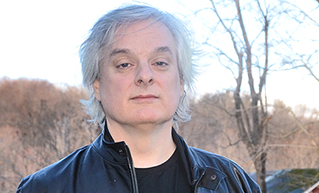
Interview Carruthers / Scientific American

Das Kekulé -Problem

Ähnliches FotoUnterbewusste hat offenbar stark an Faszination eingebüsst. Man fragt sich, ob es dereinst bewusste Maschinen geben wird. Ob diese auch ein Un- oder Unterbewusstes haben werden, auf die Frage scheint noch niemand gekommen zu sein. Cormag McCarthy ist auf Nautilus  dem Unterbewussten  nachgegangen, und welche Rolle die Sprache spielt.

Kekulé hat die Form des Benzol-Rings entdeckt, im Schlaf während eines Traums, in Form des Uroburos, der Schlange, die sich in den Schwanz beisst. Da war das Unterbewusste aktiv, aber es hat sich nicht mit einer sprachlichen Aussage gemeldet, sondern mit einem Bild, einem Symbol. Das ist typisch für das Unterbewusste, schreibt McCarthy. Es habe nämlich eine Abneigung gegen Sprache, die ihm aufgepfropft wurde. Zudem ist die Sprache kein evolutionäres Produkt, sondern eine Erfindung. Warum aber das UB die Sprache nicht benützt, ist das eigentliche K-Problem. Zur Sprache schreibt er: 

The sort of isolation that gave us tall and short and light and dark and other variations in our species was no protection against the advance of language. It crossed mountains and oceans as if they werent there. Did it meet some need? No. The other five thousand plus mammals among us do fine without it. But useful? Oh yes. We might further point out that when it arrived it had no place to go. The brain was not expecting it and had made no plans for its arrival. It simply invaded those areas of the brain that were the least dedicated. I suggested once in conversation at the Santa Fe Institute that language had acted very much like a parasitic invasion and David Krakauer—our president—said that the same idea had occurred to him. Which pleased me a good deal because David is very smart. This is not to say of course that the human brain was not in any way structured for the reception of language. Where else would it go? If nothing else we have the evidence of history. The difference between the history of a virus and that of language is that the virus has arrived by way of Darwinian selection and language has not. The virus comes nicely machined. Offer it up. Turn it slightly. Push it in. Click. Nice fit. But the scrap heap will be found to contain any number of viruses that did not fit.

Das Kekulé-Problem hat McCarthy übrigens auch gelöst.

I’d been thinking about the Kekulé problem off and on for a couple of years without making much progress. Then one morning after George Zweig and I had had one of our ten hour lunches I came down in the morning with the wastebasket from my bedroom and as I was emptying it into the kitchen trash I suddenly knew the answer. Or I knew that I knew the answer. It took me a minute or so to put it together. I reflected that while George and I had spent the first couple of hours at cognition and neuroscience we had not talked about Kekulé and the problem. But something in our conversation might very well have triggered our reflections—mine and those of the Night Shift—on this issue. The answer of course is simple once you know it. The unconscious is just not used to giving verbal instructions and is not happy doing so. Habits of two million years duration are hard to break. When later I told George what I’d come up with he mulled it over for a minute or so and then nodded and said: “That sounds about right.” Which pleased me a good deal because George is very smart.

Artikel Nautilus

The Death of SpaceTime & Birth of Conscious Agents


Donald Hoffman erläutert am SAND-Kongress (Science and Non Duality) sein Konzept von Bewusstsein und Realität. Auf dem Podium diskutiert er zusammen mit Daniel Dennett und David Chalmers. Das ist ziemlich viel Prominenz und zeigt die Position von Hoffman an.

Kant hätte kein Wort verstanden, aber dem meisten wohl zugestimmt. Die Welt hinter der Wahrnehmung, wie sie Hoffman darstellt, entspricht weitgehend dem kantischen Noumenon. Eine Welt ohne Raum, Zeit, Kausalität und Substanz. All dies wird vom Verstand (Mind) erstellt. Auch Schelling wäre zufrieden, sieht er doch Bewusstsein als Eigenheit aller Elemente, von den einfachsten Partikeln bis zum Menschen, natürlich in zunehmender Intensität. Für Schelling ist alles beseelt, was wohl auf das gleiche herauskommt wie die bewussten Agents von Hoffman. Auch Hume könnte vielem zustimmen. Die Kausalität in der von uns wahrgenommenen Realität gibt es nicht. Was wir sehen ist die Benutzeroberfläche, die Objekte sind Symbole – wie Icons auf dem Bildschirm. Auf dieser symbolischen Ebene gibt es keine kausalen Beziehungen, das spielt sich in der von uns nicht wahrnehmbaren Welt hinter der Erfahrung ab. Das hat vor 20 Jahren oder so auch schon Noerretranders gesagt.

Schwieriger zu verstehen ist Hoffmans mathematische Abbildung des Bewusstseins. Das Zusammenführen von Bewusstsein und Mathematik mag realitätsfremd und vielleicht absurd sein, es hat zumindest eine gewisse Faszination.

Dennett hat keine Freude, fragt sich, weshalb Hoffman diesen Weg gewählt hat (abgekommen vom richtigen, offenbar) und stellt seine Position kurz zusammengefasst dar. Bewusstsein ist ein Pseudoproblem, der Begriff des Hard Problems ist für ihn ein Djingle, ein endlos wiederholter Slogan, ohne Inhalt. Bewusstsein ist die Wahrnehmung unserer Gehirnaktivität. Punkt. Kein Geheimnis, nichts Aufregendes.

Am gleichen Kongress ist Spira dabei. Er kommt ohne die “Welt an sich” hinter der Wahrnehmung aus. Die andere Extremposition bezogen auf Dennett, für den es als überzeugten Monisten auch nur eine Ebene der Realität gibt, die materielle. Allerdings liesse sich Hoffman mit Spira “versöhnen”, denn auch Spira anerkennt die Aktivität des Mind als aktiv tätiges Bewusstsein. Und Hoffman sagt sogar, all there is is consciousness.

Wo mir Hoffman am meisten in die Quere kommt ist sein ungebremster Darwinismus. Er gehört fest zu seinem Konzept. Interessant aber irgendwie jenseits meines Verständnisses die Interpretation des Raums als risikominimierender Code.

Youtube mit Diskussion

Chalmers – Echte virtuelle Realität

imageDavid Chalmers, University Professor of Philosophy and Neural Science and Co-Director of the Center for Mind, Brain, and Consciousness at New York University, hat sich anhand der neuen Virtual Realität-Technologien die Frage gestellt, was die Natur unserer Realität ist. Er stellt klar fest, virtuelle Realität ist reale Realität, nicht Illusion. Und möglicherweise genau so lebenswert wie die von uns als primäre Realität erlebte Erfahrung. Ausführlich legt er das in einem Interview auf Edge.org dar.

Mit der künstlich erzeugten virtuellen Realität stellt sich ganz von allein die Frage, wieweit unsere erlebte Realität nicht allenfalls auch virtuell ist. Möglicherweise das Produkt eines begabten Programmierers eine Stufe höher. Vielleicht ist er aber selbst nur wieder virtuelles Erzeugnis einer nochmals höheren Stufe.

Die Idee ist nicht neu. Tipler wirft die genau gleiche Frage in seiner “Physik der Unsterblichkeit” auf.  imageDas war vor 20 Jahren als virtuelle Realität noch nicht gängiger Begriff war. Damals kannte man die Technik der Emulation – bspw. ein Commodore 64 auf einem Windows 7-Computer. Auch das erlaubt die Vorstellung einer unendlichen Reihe von  Informationsverarbeitungs-Prozessen. Aber die stets neuste Technologie ist auch die naheliegendste für gängige Metaphern. Ist sie deshalb auch besser? Ist unsere Realität, die erfahrene, so problemlos als virtuell zu empfinden? Ich meine nein.

Die virtuelle Realität beruht auf Pixeln, reiner Oberfläche. Der Mensch hat grosse physische Tiefe. An die 100 Mrd. Zellen und noch mehr Mikroben. Nicht dass sich das computermässig nicht simulieren liesse, aber es ist wenig zweckmässig, auch wenn die enorme Datenmenge in einer mehr oder weniger fernen Zukunft zu bewältigen wäre, auch von 7 Mrd. Menschen samt fortlaufender Veränderung dierser Zellhaufen. Für mein Gefühl scheitert die Metapher der Wirklichkeit als denkbarem virtuellen Konstrukt daran. Es macht keinen Sinn. Wenn schon, scheint mir Tiplers Emulation überzeugender. Aber es bleibt stets die Gefahr durch die Verführung durch Metaphern, die als Wirklichkeitsbilder missverstanden werden (bspw. ganz schlimm das Hirn als Computer).


Links

Edge.org (Video), InstaPaper

Sound


Zitate

What’s artificial intelligence? That’s an artificial mind. What’s virtual reality? That’s an artificial world. This is great for a philosopher because philosophy, as I see it, is all about thinking about the nature of the mind, the nature of the world, and the connection between them. Thinking about artificial minds and artificial worlds can shed a lot of light on the mind and the world more generally.

Full-scale virtual reality is an immersive, interactive, computer-generated environment. Ordinary physical reality meets two of those three conditions: it’s immersive—it feels like I’m in the middle of it—and it’s interactive. I’m interacting with it, but it’s presumably not computer generated, so it only meets two out of three.
I’m inclined to think this is, again, the wrong way to think about virtual reality or simulations. Simulated worlds are perfectly real worlds, they’re just digital worlds—worlds fundamentally grounded in information.

You might think that a virtual reality would be too insubstantial to be a genuine reality.  If we’re in a virtual reality, objects are not solid the way things seem to be.  But we know from physics that objects are mostly empty space.  What makes them some of them count as solid is the way they interact with each other.  And that pattern of interaction can be present in a virtual reality.

You might also worry about space.  Some people think that if we’re in a virtual reality, objects aren’t spread out in space the way they seem to be.  But relativity, quantum mechanics, and other more recent theories increasingly suggest that nothing fully satisfies our intuitive conception of space as a sort of primitive container of matter.  Like solidity, space is grounded in the way things interact with each other.

Now some people, of course, have speculated that we ourselves may be living in a virtual reality, that our own environment may be virtual. This is the hypothesis that we are living in a computer simulation and have been since the beginning. That’s the hypothesis made famous by movies like The Matrix.

If unsimulated beings are a minority, it’s more likely that we’re one of the simulated beings way down there. Now there are various ways that reasoning can go wrong, but at the very least it gives us some reason to take seriously the hypothesis that we could be inhabiting a virtual reality and to think about what follows.

You can see the simulation hypothesis, the hypothesis that we’re in a simulation as a version of the multiverse idea, that there are multiple universes coexisting.
Maybe there’s a theology here. Whoever created our universe—the simulator—in a way, that’s our god, our creator. This being might be all-powerful, able to control our universe, all-knowing.

So even if there is a locally all-powerful creator, wonderful, but I’m not going to erect a religion around you. I’d be inclined to say, at best, these beings—our simulators—might be gods with a lower case g, not Gods with a capital G.

The chances are the god that you’re going to get from this simulation theology is an extremely watered-down god that would probably seem somewhat blasphemous from the perspective of traditional religion.

It could well be that we’re in a simulation. Maybe we’ll never get proof of this. Or if we’re not maybe we also can’t get proof. So I don’t want to say we’re exactly in the territory of a scientific hypothesis. This is more of a philosophical hypothesis.

Some people might speculate on the possibilities of an afterlife: If we are ultimately code, then that code could be uploaded into a different environment, maybe into the environment of the next universe up. Think of it as a science-compatible version of ordinary religion.

Within a decade or two I’m sure we’re going to have virtual reality that begins to be, visually and auditorily at least, indistinguishable from worlds like ours.

Some things are going to take a while to build into virtual reality, but I suspect within a century there will be Matrix-style virtual reality, which is more or less indistinguishable from our kind of reality.

Someone once said, “If a mind was so simple we could understand it, we’d be too simple to understand the mind.” So maybe there is something essentially complex and inexplicable about the mind. Maybe part of the charm of deep learning is that it’s a machine-learning system that develops things we don’t fully understand and couldn’t have predicted in advance.