Das macht Freude, und haben wir es nicht schon immer gewusst: Der Design-Minimalismus als Lebenshaltung und ästhetische Maxime ist out. Auch ein Zeichen der Zeitenwende, die sich vor unseren Augen abspielt.
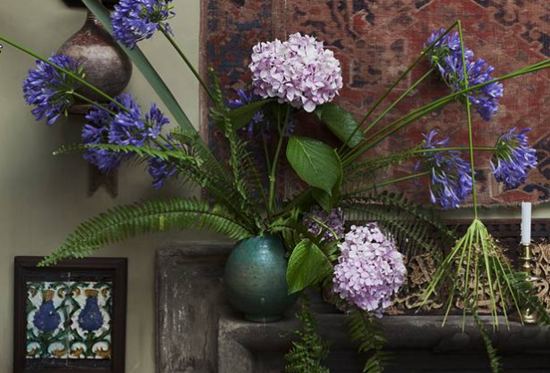
Dazu der heutige Artikel im WSJ. Die Anleitung für das neue Leben hier verbatim:
THE MAXIMALIST LIST
Martina Mondadori Sartogo, editor and founder of Cabana, enumerates 10 key elements of the magazine’s lush and layered aesthetic, a visual vocabulary credited with bringing maximalism into the mainstream
1. Pass on pastels. Bold colors such as burgundy, royal blue, saffron, terra-cotta, magenta and bottle green are more in keeping with this untimid look.
2. Embellish the walls. Hand-painted decoration and stencils inspired by centuries-old Turkish and Russian structures and Renaissance Italian palazzi add richness.
3. Look down. As shoes are important in defining both women’s and men’s style, so is a carpet in a room. My favorite styles are the straw and leather ones made in Mauritania, Bessarabian rugs made in Moldavia and Eastern Europe, and kilims.
4. Seek out the unique. Vintage textiles, for example. Source pieces at specialized boutiques, flea markets or auctions. If you are lucky enough to find a large piece (maybe a vintage embroidered suzani), hang it on the wall as an art work or use it as a curtain to separate two rooms.
5. Provoke with pattern. Play with different prints. Apply a mix to sofas, perhaps one pattern on the sofa fabric and another on the cushions. Do the same with walls.
6. Start a collection. And become obsessive with it. A few ideas: vintage books, hand-painted ceramics, wicker objects, marquetries, tiles (have them framed and then hang them), drawings, boxes. There is more than just contemporary art out there, and older pieces are often much cheaper. It is hard for a collection to look like hoarding because once you display the items together, they look good as a “family” of objects.
7. Fill your rooms with ‘stuff.’ You don’t want your house to look immaculate. By stuff, I mean: books (tons, please), collections, flea market finds, curiosities from antique shops.
8. Always add flowers. Any room looks better with them but not a manicured bouquet. Go for the wild bunch.
9. See the gold in old. Use an inherited chest of drawers next to your bed or in the dining room to store linens. A family piece immediately gives a sense of a lived-in home, as opposed to a house where every piece of furniture has been made new.
10. Be patient. Rome wasn’t built in a day. Homes develop over years, as you layer in your collections and antique-market finds and memorabilia from traveling. It is that patina of time that creates personality and charm.
Man kann mir vorwerfen, ausgerechnet ich feiere hier den Maximalismus. Als Sammler von Minimal Art (Judd, LeWitt, Sandback, ..), Hörer von Minimal Music (Reich, …). Aber man muss tief in diese Minimal Welt eingetaucht sein, um sowohl ihre Schönheit wie ihre Grenzen zu sehen, behaupte ich. Der gängige Architektur Minimalismus (die Schweizer Kiste) und die Ikea Ästhetik sind bloss die Abbilder einer vollkommen geistlosen, zombihaften und kulturlosen Geisteshaltung und Lebensform, welche uns auf Schritt und Tritt verfolgt.
Wir haben in den letzten zwei, drei Jahrzehnten die Digitalisierung der Welt erlebt. Das ist weit mehr, als bloss mp3 und jpg-Fotos. Dahinter steht ein eigener Geist, der die Digitalisierung erst möglich gemacht hat. Der künstlerische Minimalismus hat damit nichts zu tun. Der ist viel älter, mind. zwei Jahrzehnte.
Der Maximalismus steht im Gegensatz zur Digialisierung, nicht zu Minimal. Dazu gehören Vinyl-Platten und gedruckte Bücher. Er ist vermutlich nicht mehr als eine ephemere Gegenreaktion, aber schon als solche bemerkenswert.
Ganz abgesehen dass ich schon immer eine grosse Vorliebe für mit Büchern überfüllte Coffee-Tables, vollgestopfte Bücherregale, eine Vielzahl von angefangenen Sammlungen (Indische Bronzen, Kuhskulpturen aus aller Welt, zufälliger NickNack), farbige Wände und Teppiche etc. hatte.
Instapaper


 wirth.blog
Du muss angemeldet sein, um einen Kommentar zu veröffentlichen.