Vittorio Magnago Lampugnani beschreibt in der NZZ einen offenkundige, selten thematisierten Zustand. Ausgehend von einem Architekturvortrag vor über 100 Jahren, gehalten von einem Hendrik Petrus Berlage, schreibt Lumpagnani:
Es war der niederländische Architekt Hendrik Petrus Berlage, der vor über hundert Jahren diese Auffassung vertrat, und zwar in einem Vortrag mit dem Titel «Baukunst und Impressionismus». Bis dahin waren die städtischen Häuser Gebilde mit komplex artikulierten Hüllen gewesen. Sie waren in Hauptteil, Basis und Attika gegliedert, die jeweils anders gestaltet und oft auch aus anderen Materialien hergestellt waren: der Sockel widerstandsfähig, weil am exponiertesten, und schwer, um Solidität zu vermitteln, die Attika leicht und licht, allenfalls mit kräftigem Gesims, um den oberen Gebäudeabschluss zu markieren. Dazwischen waren die Fenster rhythmisch in die Fassade eingeschnitten, wobei Rahmen oder Faszien den Übergang zwischen Fläche und Öffnung thematisierten.
Die Fensterbänke standen stärker vor, um Wassernasen zu vermeiden, aber auch um dem Fenster mehr Halt in der Wand zu verleihen. Die Fensterläden waren in die Gesamtkomposition integriert. Flächige oder plastische Zierelemente unterstrichen sie und fügten dekorative und erzählende Dimensionen hinzu, die das Haus mit seiner Nutzung, seinem Bauherrn oder einfach nur seiner Zeit verknüpften. All das, so Berlage, war nunmehr anachronistische Verschwendung und würde vom neuen, rasanten Lebensrhythmus dahingerafft werden.
Von da vorwärts zur Gegenwart, mit Häusern und Städten, die gebaut wurden für die Insassen “rasender Automobile”, welche für architektonische Feinheiten weder Zeit noch das Auge haben.
25. bis 29. Januar Paris, Spira im Dojon. Übernachtung im Monterosa, Rue de la Bruyère.
Am 28. im Louvre. Zur Erinnerung der riesige Veronese (Hochzeit von Kanaan). Im selben Saal wie die Mona Lisa. Nur halt so viel interessanter. Der etwas leblose Jesus in der Mitte mit seinem durchdringenden Blick. Ganz links (hier nicht sichtbar) die Braut mit Bräutigam. Dazu die Hunde, die Musiker und tausendundein Symbole. Grosses Kino, wie man so sagt.
Unten die Gilets Jaunes im Original auf dem Boulevard Voltaire. Ganz passend.
Nachtessen jeweils mit Dora und Urs. Auf dem Bild im edlen Vegi-Italiener beim Gare du Nord.
Paris: Kein Bobo-Aufstand, keine Lehrer, Sozialarbeiter, Studenten, Professoren, sondern die Leute vom Land. Nicht das Kleinbürgertum, die Proletarier melden sich, mit ihren Parolen und Methoden, und das Kleinbürgertum, welche die Meinungsdominanz ihr eigen nennt, ist entsetzt. Interview in spiked mit Christopher Gully.
Back in 2014, geographer Christopher Guilluy’s study of la France périphérique (peripheral France) caused a media sensation. It drew attention to the economic, cultural and political exclusion of the working classes, most of whom now live outside the major cities. It highlighted the conditions that would later give rise to the yellow-vest phenomenon. Guilluy has developed on these themes in his recent books, No Society and The Twilight of the Elite: Prosperity, the Periphery and the Future of France. spiked caught up with Guilluy to get his view on the causes and consequences of the yellow-vest movement.
spiked: What is the role of culture in the yellow-vest movement?
Guilluy: Not only does peripheral France fare badly in the modern economy, it is also culturally misunderstood by the elite. The yellow-vest movement is a truly 21st-century movement in that it is cultural as well as political. Cultural validation is extremely important in our era.
One illustration of this cultural divide is that most modern, progressive social movements and protests are quickly endorsed by celebrities, actors, the media and the intellectuals. But none of them approve of the gilets jaunes. Their emergence has caused a kind of psychological shock to the cultural establishment. It is exactly the same shock that the British elites experienced with the Brexit vote and that they are still experiencing now, three years later.
The Brexit vote had a lot to do with culture, too, I think. It was more than just the question of leaving the EU. Many voters wanted to remind the political class that they exist. That’s what French people are using the gilets jaunes for – to say we exist. We are seeing the same phenomenon in populist revolts across the world.
spiked: How have the working-classes come to be excluded?
The Meyerowitz Stories was selected to compete for the Palme d’Or in the main competition section and also won the Palm Dog award at the 2017 Cannes Film Festival.[2][3][4] It received positive reviews from critics, who praised Baumbach’s script and direction as well as the performances, with Sandler especially singled out for praise. It was released in select theaters and on streaming by Netflix on October 13, 2017.
Jüdisches Künstler-Milieu in New York. Erinnert an die frühen Woody Allen-Filme. Möglichst nah dran am Alltag, Dramatik des Alltäglichen. Gescheit und unterhaltsam. Nur Emma Thompson kommt mit der Rolle nicht richtig zurecht. Auch ihr Outfit ist zu übertrieben. Musik von Randy Newman. Hochgelobt und mit vielen Auszeichnungen – auch in Cannes.
In der NZZ wird die Frage nach der Realitätsaussage der Quantenmechanik gestellt. Offenbar wird die Realität eindeutig erst durch die Beobachtung konstituiert. Das scheint unbestritten. Doch bleibt unklar, was unter Realität hinter der Beobachtung überhaupt zu verstehen ist. Im Artikel wird ausgeführt:
Das Kernstück der heutigen Quantentheorie ist Schrödingers Wellen- oder Zustandsfunktion. Nach einem breiten Konsens unter Physikern enthält sie die vollständige Information über das betreffende Quantensystem. Sie beschreibt das Spektrum der möglichen Messwerte – etwa Position, Energie, Spin eines Teilchens. Aber im Gegensatz zur klassischen Situation existiert dieses Teilchen erst in einem eindeutigen realen Zustand, wenn wir es gemessen haben.
Das stellt nun den Realismus des klassischen physikalischen Weltbilds von den Füssen auf den Kopf. In diesem Weltbild existieren die physikalischen Systeme unabhängig von den Messinstrumenten, und die Instrumente sind einfach Informationslieferanten. John Archibald Wheeler, einer der phantasievollsten Physiker des 20. Jahrhunderts, hat darin eine der grossen Fragen der modernen Physik geortet. Ein reales physikalisches System bezeichnet er als «It»; die Information in der Zustandsfunktion als «Bit». Klassisch sagen wir: Da ist ein Teilchen in einem bestimmten Zustand – ein It –, und wir messen an ihm bestimmte Grössen: «Bit from It». Quantentheoretisch sagen wir: Wir messen bestimmte Grössen und schliessen daraus, dass sich da ein Teilchen in einem bestimmten Zustand befindet: «It from Bit». Ein Lichtpunkt auf dem Bildschirm, ein elektrischer Puls, ein Klick im Detektor: Das sind die Antworten des Apparats, die informationellen Atome der Realität.
«It from Bit» hat das Zeug zu einer konzeptuellen Revolution. Die Welt dreht sich nicht mehr um ihre materiellen, sondern um ihre informationellen Elemente. Warum ist die Welt quantisiert? «It from Bit» gibt uns eine trivialgeniale Antwort: weil unsere Fragen und Antworten letztlich quantisiert sind, sich auf abzählbar viele binäre Entscheide zurückführen lassen: Fliesst ein Strom oder nicht? Handelt es sich um die Spur eines Antiprotons? Unter das Ja-oder- Nein-Niveau kommen wir nicht.
Anton Zeilinger, der Quanteninformatiker aus Wien, der heute Wheelers Idee im Labor weiterführt, schreibt, dass «wir bewusst nicht mehr fragen, was ein elementares System eigentlich ist. Sondern wir sprechen letztlich nur über Information. Ein elementares System (. . .) ist nichts anderes als der Repräsentant dieser Information, ein Konzept, das wir aufgrund der uns zur Verfügung stehenden Information bilden.» Zeilinger stellt sogar das radikale Postulat auf: «Wirklichkeit und Information sind dasselbe.» Man könnte vom Postulat des informationellen Realismus sprechen: Am Anfang war das Bit.
Der klassische Idealismus und mit ihm Advaita wird sagen, die Beobachtung und das Beobachtete sind eins. Esse est percivi, wobei wir wieder bei Berkley wären. Oder die eigene Einsicht: Es ist uns keinerlei Möglichkeit zur Unterscheidung gegeben. Die Suche nach dem It führt nirgendwo hin.
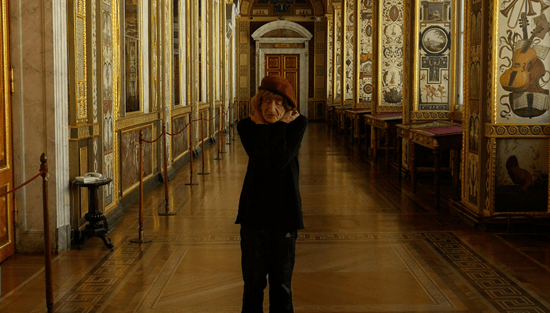
Oleg Karavaichuk (1927-2016), Russischer Pianist und Komponist. Ich bin durch einen Film auf Arte auf ihn gestossen. Der spanische Film wurde ein Jahr vor seinem Tod gedreht.
Ein merkwürdiger Mensch. Man weiss nicht ob Mann oder Frau, je älter je fraulicher, vielleicht. Mit einer Musik zwischen allen Stühlen. Walzer und Minimal mit “emanzipierter Dissonanz” gemäss Schönberg. Grossartige Musik. Sehr stark.
Beeindruckend, berührend in seiner absoluten Hingabe an die Musik.
Mit russischer Schreibweise auch auf Spotify mit einigen Aufnahmen aufzufinden.
Just like his compositions that mix consonance and dissonance, Oleg Nikolaevich Karavaichuk is an ever-changing character in this affectionate portrait, which retains a certain mystery. When the androgynous octogenarian passes through the corridors of the Hermitage Palace to sit at Tsar Nicholas’s magnificent piano, his remarks on the contrast between the snow-covered streets of Saint Petersburg and the architectural and historical force of the place set the tone of the film: each digression in his conversation and music is anchored in the intensity of his feeling for textures and matter. So Oleg concludes a political anti-Putin lament with a note of olfactory melancholy: “Why does the fruit at the market no longer have a smell?” What indeed, in today’s Russia, no longer touches the senses, or even the sentiments?
The pianist, who wrote scores for Sergei Parajanov and Kira Muratova, sometimes seems almost delirious, but above all he incarnates in a single body his country’s recent upheavals. The disaffection he mentions is echoed by the splendid shots of his deserted dacha, where the library is intact but for a Lenin lying forgotten on the floor. With his high-pitched voice and often tactile metaphors, this artist – who seems to have traversed the centuries – is in himself a Russian ark. (Charlotte Garson)
Nach der verklärten Nacht ein weiteres Vordringen zu Schönberg: Das Streichquartett Nr. 1 und die sechs kleinen Klavierstücke. Zum Streichquartett schreibt Greenberg:
An important work is Schoenbergfs String Quartet No. 1 in D minor of 1905. It is a long piece cast in four continuous movements. Three aspects of the quartet emphasize its modernity. First is its incredible polyphonic intensity: Each of the four instruments of the quartet is a soloist much of time. Second, Schoenbergfs phrases are not balanced, poetic phrases with antecedent and consequent structures. Rather, they are prose.like, open ended, and rhapsodic. Third, the variety of string quartet textures Schoenberg employs is mind.boggling.
Zum frühen Werk schreibt er:
Schoenberg believed in melody more than anything else. As the first years of the 20th century progressed, he ceased to believe in the tonal harmonic system. By 1908, Schoenberg had come to the conclusion that functional harmony stifled and constrained melody by forcing it to adhere to what he believed were “artificial” constructs: chords built by stacking thirds and chord progressions based on harmonic motion by perfect fifths.
Schoenberg began to perceive his artistic mission as that of a simplifier, no small irony given how difficult his music can be for the uninitiated listener. Between 1908 and 1913, Schoenberg composed a series of experimental works that remain among the great masterworks of the 20th century, including the Five Pieces for Orchestra, Op. 16 (1909), Erwartung, Op. 17 (1909); Pierrot Lunaire, Op. 21 (1912), and Die glückliche Hand (1913).
To describe his work, Schoenberg preferred the word pantonal, implying that his music embraced a sort of all‑encompassing ur‑tonality. This course will simply call it nontonal.
Scientific American befasst sich – einmal mehr – mit der Frage nach Natur und Funktion des Bewusstseins. Es geht auch um das Zusammenspiel von Mind, Awarness und Bewusstsein. Wie fast immer, bleibt vieles nebulös, aber die beschriebenen Überlegungen von Peter Carruthers im Interview düpfen einen sonst nie erwähnten Punkt: die Herkunft der Gedanken.
Es kommen Einfälle, Ideen etc., aber woher und wieso? Eine witzige Bemerkung, ein Einwand, eine Erinnerung etc. Wir sollten auf dem Heimweg noch Brot zu kaufen. Aber wir vergessen es, oder erinnern uns daran. Wir können diese Bewegungen im Geist beobachten, aber es ist, so Carruthers, nicht anders, als wenn wir einen anderen Menschen beobachten, der etwas sagt oder es nicht sagt. Was in seinem Kopf vorgeht ist uns nicht weniger zugänglich als die Tätigkeit unseres eigenen Geistes.
Habe mich auch schon gefragt: welche Schuld trage ich, wenn ich mich erinnere oder vergesse? Es liegt ausserhalb meines Einflusses. Aus dem Unbewussten dringt etwas an die Oberfläche, oder nicht. …
What makes you think conscious thought is an illusion?
I believe that the whole idea of conscious thought is an error. I came to this conclusion by following out the implications of the two of the main theories of consciousness. The first is what is called the Global Workspace Theory, which is associated with neuroscientists Stanislas Dehaene and Bernard Baars. Their theory states that to be considered conscious a mental state must be among the contents of working memory (the “user interface” of our minds) and thereby be available to other mental functions, such as decision-making and verbalization. Accordingly, conscious states are those that are “globally broadcast,” so to speak. The alternative view, proposed by Michael Graziano, David Rosenthal and others, holds that conscious mental states are simply those that you know of, that you are directly aware of in a way that doesn’t require you to interpret yourself. You do not have to read you own mind to know of them. Now, whichever view you adopt, it turns out that thoughts such as decisions and judgments should not be considered to be conscious. They are not accessible in working memory, nor are we directly aware of them. We merely have what I call “the illusion of immediacy”—the false impression that we know our thoughts directly.
One might easily agree that the sources of one’s thoughts are hidden from view—we just don’t know where our ideas come from. But once we have them and we know it, that’s where consciousness begins. Don’t we have conscious thoughts at least in this sense?
In ordinary life we are quite content to say things like “Oh, I just had a thought” or “I was thinking to myself.” By this we usually mean instances of inner speech or visual imagery, which are at the center of our stream of consciousness—the train of words and visual contents represented in our minds. I think that these trains are indeed conscious. In neurophilosophy, however, we refer to “thought” in a much more specific sense. In this view, thoughts include only nonsensory mental attitudes, such as judgments, decisions, intentions and goals. These are amodal, abstract events, meaning that they are not sensory experiences and are not tied to sensory experiences. Such thoughts never figure in working memory. They never become conscious. And we only ever know of them by interpreting what does become conscious, such as visual imagery and the words we hear ourselves say in our heads.
Greenberg ist in seiner Serie zur Great Music of the 20th century über alle Massen begeistert über den Sacre du Printemps von Stravinsky. Und zu recht.
Stravinsky gehört auch auf meiner Liste zu den vier massgeblichen oder am meisten herausragenden Musikern / Orchestern … des 20. Jhts. (Zusammen mit Miles Davis, den Beatles und Debussy (?).
Und der Sacre ist und bleibt überwältigende Musik. Das YouTube-Video obgleich in sehr bescheidener Qualität vermittelt die ungeheure Kraft und Energie und Vitalität.
Greenberg schreibt: The Rite appeared to be devoid of any reference to the long and glorious Western musical tradition as it existed at the time. Rather, it created what appeared to be an entirely new musical language and expressive world.a primal, sexual, violent, thrumming, premoral musical world in which pure rhythmic energy for its own sake became the principal musical element. In terms of its expressive content, The Rite has been described as a metaphor for the breakdown of 19th.century values, as a symbol of the post.Victorian sexual awakening of the early 20th century, and even as an analog for the modern technology that led to the butchery of the First World War.
In “Der Kampf mit dem Dämon” charakterisiert Stefan Zweig Nietzsche mit grosser Geste und Intensität. Und er hat offensichtlich auch immer sich selbst im Blick und misst sein eigenes Tun und Erleben an diesem getriebenen Geist, ohne dies allerdings je offen zu legen. Ein paar Zitate aus dem Buch (in welchem auch Hölderlin und Kleist und ihren Dämonen nachgegangen wird).
*
Nehmen wir Goethe – immer wieder ihn, die sinnfälligste aller Erscheinungen – als den Prototyp einer organischen Natur, die geheimnisvoll mit dem Weltlauf im Einklange steht, so sehen wir, dass die Formen seiner Entwicklung symbolisch die Lebensalter spiegeln. Goethe ist überschwenglich-feurig als Jüngling, besonnen-tätig als Mann, begrifflich-klar als Greis: der Rhythmus seines Denkens entspringt organisch der Lebenstemperatur seines Blutes. Sein Chaos ist im Anfang (wie immer beim Jüngling), seine Ordnung am Ende (wie immer beim Greis), er wird konservativ, nachdem er Revolutionär gewesen, wissenschaftlich aus anfänglichem Lyrismus, selbstbewahrend nach anfänglicher Selbstverschwendung.
Western psychology holds that humans are not born with a sense of self, but rather that the self is constructed over time, gradually emerging within the first two years of life. Further, much scientific research says that everything that exists in human awareness – sight, sound, even time itself – is all a construction of the mind. So what are the pitfalls of treating these constructs as objective truths? According to Mahāmudrā Buddhist teaching, explored here by the clinical psychologist Daniel Brown at Harvard University, the more enamoured we are of our selves, the more fixed we are in our own ‘realities’, limiting the possibilities of our awareness. Playing with these reflections on the self and awareness, the San Francisco-based animator Claudia Biçen uses a series of ink-and-pencil portraits of Brown to bring him into being and then let him disappear.
Die Fotos: zwei hübsche kleine Calder, der Hokusai von Baumgartner (bei Cristea), fünf kleine Bishops bei Verna, das vergoldete Skelett eines kleinen Engels, Stasia im Hof der Art und im Gespräch mit von Bartha. Dazu ein paar Impressionen von der Unlimited mit einem Aldi-Kind und Hape.
Die Kunst, die Art. Mit Hape an der Unlimited, er mit Karte als VIP First Choice, was immer das heissen mag. Eine Menge Leute, alles VIPs, offenbar. Fast zehn Jahre habe ich für die Art gearbeitet, war an den Sitzungen des Beirats, tempi passati. Kein VIP, obwohl ich doch an der Messe immer wieder Geld ausgebe.
Aber die Unlimited enttäuscht. In den letzten Jahren war sie noch ein Highlight der Messe und hat die Langeweile bei den Galerien etwas entschädigt. Das scheint jetzt auch vorbei.
Im Galerienteil die normierte Langeweile, die kaum mehr entzifferbare Kunst. Alles geht, alles ist sui generis. Da ist nichts mehr zu vergleichen, nichts zu bewerten. Für mich bloss noch ein grosses Kannitverstan.
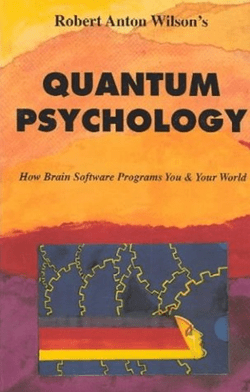
Der folgende Ausschnitt aus Robert Anton Wilsons “Quantum Psychology” zeigt das Allernormalste, Allgemeinste, total Unbezweifelte als das völlig Sinnlose. Die Zweikopf-Theorie nach Russell und klargestellt von Wilson. Lesen und nachdenken.
Die Darstellung in Wilsons Buch hat mich seit Jahren verfolgt. Das Buch, woraus sie stammt, irgendwo im Haus, unauffindbar. Vielleicht in den Kisten im Keller an der Riehentorstrasse. Ev. weggeworfen.
Lange habe ich nach Colin Wilson gesucht, ein anderer Spinner, aber das war der falsche Wilson. Heute gerät mir “Schrödingers Katze” von R.A. Wilson in die Finger und ich komme der Sache näher. Suche im Internet, finde die Quantum Psychology und weiss (80%), das ist das Buch. Auf deutsch längst vergriffen, nur noch für 210€ zu haben. Aber englisch noch greifbar, und erst noch auf Kindle. Und hier unten die heisse Stelle.
Die Sache ist einfach umwerfend. Phänomenal im wahrsten Sinne des Wortes. Und kein Mensch redet darüber. Niemand scheint es zu merken. Und es geht um nichts weniger, als die völlig unbestrittene wissenschaftliche Weltdarstellungs- und Erfahrungstheorie. Aber da ist gewaltig der Wurm drin. Warum fällt das niemandem auf? Warum schreit niemand?
Und noch eine Bemerkung: R.A.Wilson erwähnt nicht, oder bemerkt nicht oder weiss nicht (doch wohl kaum), dass hinter der ganzen Geschichte 500 Jahre europäischer, philosophischer Spekulation und endloses Rätselraten um die Natur unserer Realität steht. Beginnend mit Descartes und seinem Skeptizismus mit der Hypothese, dass möglicherweise ein Dämon uns die Illusion einer äusseren Realität eingibt (seine Lösung: der Dämon ist ein guter und heisst Gott).
Und dann kommen die Empiristen Locke, Berkeley und Hume und vor allem Berkeley lehnt die Vorstellung einer von uns unabhängigen äusseren Realität als reine Spekulation ab. Alles ist Bewusstsein. Trost findet er wie Descartes beim Gedanken, dass wir sozusagen im Geiste Gottes aufgehoben sind – warum war er schliesslich Bischof? Und in neuster Zeit haben wir die Brain in a Vat-Ideen von Hilary Putnam und drauf aufbauend oder zumindest davon inspiriert die Matrix-Filme der Wachowsky-Brüder. Also da gibt es rund um Russells Mehrkopf-Theorie doch noch allerhand aufzuarbeiten.
How Many Heads Do You Have?
Borrowing a joke (or a profundity?) from Bertrand Russell’s Our Knowledge of the External World, I will now demonstrate that the reader has two heads.
According to common sense, and the consensus of most (Occidental) philosophers, we exist „inside“ an „objective universe,“ or — to say it otherwise — the „objective universe“ exists „outside“ us.
Very few people have ever doubted this. Those who have doubted it have arrived, inevitably, at highly eccentric conclusions.
Well, then, avoiding eccentricity and accepting the conventional view, how do we know anything about that „external universe“? How do we perceive it?
</p>
</blockquote>
<p><!--more--></p>
<blockquote>
<p>
(For convenience, I will consider only the sense of sight in what follows. The reader can check for himself, or herself, that the same logic applies if one changes the terms and substitutes hearing or any of our other senses.)
We see objects in the „external universe“ through our eyes and then make pictures — models — of them in our brains. The brain „interprets“ what the eyes transmit as energy signals. (For now, we will ignore the data that shows that the brain makes a gamble that it can interpret these signals.)
Again, very few Occidentals have doubted this, and those who have doubted it all arrived at strange and incredible alternatives.
So, then, we live „inside“ an „external universe“ and make a picture or model of it „inside“ our brains, by adding together, or synthesizing, and interpreting, our pictures or models of parts of the universe called „objects.“ Then, it follows that we never know the „external universe“ and its „objects“ at all. We know the model of the „external universe“ inside our brains, which exist inside our heads.
In that case, everything we see, which we think of as existing externally, actually exists internally, inside our heads.
But we have not arrived at solipsism, remember. We still assume the „external universe“ from which we started. We have merely discovered that we cannot see it or know it. We see a model of it inside our heads, and in daily life forget this and act as
if the model exists outside our heads — i.e., as if (1) the model and the universe occupy the same area of space (as our map that tries to show „all“ about Dublin would occupy the same space as Dublin) and (2) that this space exists „outside.“
But the model and the universe do not occupy the same space and the space where the model exists can only be located „inside“ our brains, which exist inside our heads.
We now realize that, while the universe exists outside, the model exists inside, and therefore occupies much, much less space than the universe.
The „real universe“ then exists „outside“ but remains unexperienced, perhaps unknown. That which we do experience and know (or think we know) exists in local networks of electrochemical bonds in our brains.
Again, if the reader cares to challenge any part of this, she or he should certainly try to imagine an alternative explanation of perception. It will appear, or it has always appeared to date, that any and all such alternatives sound not only queerer than this but totally unbelievable to „people of common sense.
Well, to proceed, we have now an „external universe,“ very large (comparatively speaking), and a model of same, much smaller (comparatively speaking), the former „outside“ us and the latter „inside“ us. Of course, some correspondence or isomorphism exists between the „external“ and „internal“ universes. Otherwise, I could not get up from my chair, walk to the door, go down the hall and accurately locate the kitchen to get another cup of coffee from something I identify as a Coffee Maker.
But where does our head exist?
Well, our head obviously exists „inside“ the „external universe“ and „outside“ our brain which contains the model of the „external universe.“
But since we never see or experience the „external universe“ directly, and only see our model of it, we only perceive our head as part of the model, which exists inside us. Certainly, our perceived head cannot exist apart from our perceived body as long as we remain alive, and our perceived body (including head) exists inside our perceived universe. Right?
Thus, the head we perceive exists inside
some other head we do not, and cannot, perceive. The second head contains our model of the universe, our model of this galaxy, our model of this solar system, our model of Earth, our model of this continent, our model of this city, our model of our home, our model of ourselves and atop our model of ourselves a model of our head. The model of our head thus occupies much less space than our „real“ head.
Think about it. Retire to your study, unplug the phone, lock the door and carefully examine each step of this argument in succession, noting what absurdities appear if you question any individual step and try an alternative.
Let us, for Jesus’ sake and for all our sakes, at least attempt to clarify how we can have two heads. Our perceived head exists as part (a very small part) of our model of the universe, which exists inside our brain. We have already proven that, have we not? Our brain, however, exists inside our second head — our „real“ head, which contains our whole model of the universe, including our perceived head. In short, our perceived head exists inside our perceived universe which exists inside our real head which exists inside the real universe.
Thus, we can name our two heads — we have a „real“ head outside the perceived universe and a „perceived head“ inside the perceived universe, and our „real“ head now appears, not only much bigger than our perceived head, but bigger than our perceived universe.
And, since we cannot know or perceive the „real“ universe directly, our „real“ head appears bigger than the only universe we do know and perceive — our perceived universe, inside our perceived head.
The reader might find some comfort in the thought that Bertrand Russell, who devised this argument, also invented the mathematical class of all classes that „do not contain themselves.“ That class, you will note, does not contain itself unless it does contain itself. Also, it does contain itself if and only if it does not contain itself. Got it?
When not busy crusading for rationalism, world peace, common decency, and other subversive ideas, Russell spent a lot of time in the even more subversive practice of inventing such logical „monsters“ to bedevil logicians and mathematicians.
Returning to our two heads: Lord Russell never carried this joke, or this profound insight, beyond that point. With a little thought, however, the reader will easily see that, having analyzed the matter this far, we now have three heads—the third containing the model that contains the „real“ universe and the „real“ head and the perceived universe and the perceived head. And now that we have thought of that, we have a fourth head…
And so on, ad infinitum. To account for our perception of our perception — our ability to perceive that we perceive — we have three heads, and to account for that, four heads, and to account for our ability to carry this analysis onward forever, we have infinite heads…
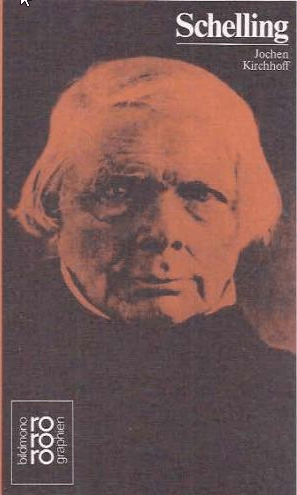
Die Monographie zu Schelling von Jochen Kirchhoff fertig gelesen.
Das K. zu S. ein tiefes und grundlegend positives Verhältnis pflegt, ist unübersehbar. Also ist das keine distanzierte Darstellung. Vorbehalte kommen von K. lediglich in Form von kritischen Äusserungen etwa zu Sprache (Verständlichkeit), Organisation oder Unvollendetheit der Gedanken.
Aber das Büchlein ist ganz hervorragend und gibt einen enorm hilfreichen Überblick über die Entwicklung und inneren Zusammenhänge des deutschen Idealismus zwischen Kant und Schoppenhauer.
Und die Zitate sind jeweils gut gewählt und lassen erkennen, welche gewaltiges Ringen hinter dem Gedankengebäude Schellings steht.
Und ich gewinne den Eindruck, dass von allen, mir wichtigen Philosophen deutscher Sprache – als da wären Kant, Fichte, Schelling, Hegel, Schopenhauer, Nietzsche, Steiner, Husserl, Heidegger – Schelling in all seiner Buchstückhaftigkeit mir der wichtigste sei.
Mit fällt jetzt gerade dieses Zitat ein:
Die Freiheit liegt im Sein, nicht in der Tat.
Dahinter steht ein grosses, esoterisches Gebäude das wohl kein zeitgenösscher Denker mehr zu betreten wagte. Ausser vielleicht Kirchhoff selbst und ein paar andere, die aber keinen offiziellen, akademischen Anspruch erheben dürfen sondern sowohl im universitären wie medialen Betrieb bestenfalls als Kuriositäten gehandelt werden, was massgeblich zur geistigen Dürre unserer Gegenwart beiträgt.
A Dialogue Between a Buddhist Scholar and a Theoretical Physicist.
Alan Wallace, a world-renowned author and Buddhist scholar trained by the Dalai Lama, and Sean Carroll, a world-renowned theoretical physicist and best-selling author, discuss the nature of reality from spiritual and scientific viewpoints. Their dialogue is mediated by theoretical physicist and author Marcelo Gleiser, director of Dartmouth’s Institute for Cross-Disciplinary Engagement.
Recorded February 9, 2017 Nourse Theater – San Francisco, CA
p. Für mich – jedenfalls – ganz erstaunlich und erfreulich, was sich auf diesem YouTube alles abspielt und zugänglich ist. Das Video bringt die Auseinandersetzung zwischen einem Physiker und einem Buddhisten und der Physiker entwickelt in aller nur wünschbaren Klarheit den materiellen Blickwinkel zum Verständnis von Ich und Welt. In dieser Interpretation (narrative) gibt es kein Bewusstsein im Sinne einer materiell unabhängigen Entität. Was es gibt ist die Interaktion der atomaren Bestandteile von Gehirn und Körper, und die erklären auf ihrer Ebene alles. Eine davon unabhängige Instanz müsste energetisch in dieses System eingreifen. Wir können nichts derartiges feststellen.
Wallace zitiert eine Reihe eminenter Physiker welche den materialistischen Fundamentalismus nicht unterschreiben und auf ihr Unwissenheit diesbezüglich verweisen. Ein interessanter Punkt von Wallace: wir beziehen uns in unserem Wissen fast ausschliesslich auf die Aussagen weisser, europäischer oder amerikanischer Wissenschaftler aus dem 20. Jht. In Asien hat man die Fragen nach der Realität der Welt und von Bewusstsein seit 5 tausend Jahren untersucht. Und ihr Wissen wird zumindest auf wissenschaftlicher Ebene nicht aufgenommen. Schliesslich sagt er auch noch einiges über Reinkarnation, die für ihn anscheinend ausser Frage steht.
Nietzsche sagt: »es gibt zweierlei Leidende, einmal die an der Überfülle des Lebens Leidenden … und sodann die an der Verarmung des Lebens Leidenden, die Ruhe, Stille, glattes Meer, Erlösung von sich durch die Kunst und Erkenntnis suchen, oder aber den Rausch, den Krampf, die Betäubung, den Wahnsinn. Dem Doppelbedürfnisse der letzteren entspricht alle Romantik in Künsten und Erkenntnissen.« Und damit stoßen wir auf die tiefste Bedeutung, die das Wort »Reaktion«, angewendet auf jene Zeit, besitzt: sie reagiert auf die erzwungene Lebensverarmung durch Selbstbetäubung im Krampfe des Rausches oder der Erstarrung. Rahel Levin nannte den Gesellschaftszustand »die unendliche Tiefe der Leere«, was ein sehr kompetenter Beurteiler, nämlich Metternich, als »eine wahrhaft genialische Inspiration« bezeichnete.
p. Was kann man Besseres sagen als über die Gegenwart, oder 150 Jahre später?
Ich war knapp dreissig, sie knapp 60 als ich sie kennenlernte. Ich junger Redaktor der Schweizerischen Finanzzeitung, sie bekannte und brotlose Kunstkritikerin. Knapp zehn Jahre arbeiteten wir zusammen.
Es war mehr als Arbeit. Zwei, drei Mal pro Monat gingen wir in die Kunsthalle, machten gemeinsame Kunst-Reisen nach Berlin, Paris, Stuttgart und an die Documenta in Kassel. Selbst Ferien verbrachten wir gemeinsam in Marina die Massa in der Toscana. im Hotel Nedy, damals bekannt unter Schweizer Medien-Intellektuellen dank hervorragender Küche.
Wir diskutierten unentwegt über Kunst und Welt, doch offenbar kaum oder gar nichts Privates. Dass sie nicht Baslerin war, sie sprach das beste Baseldeutsch das ich bis anhin gehört hatte – samt Bodeduech und Badstube – wäre mir nie in den Sinn gekommen. Aber sie war von Geburt Berliner Jüdin, vor dem Krieg zum Studium nach Basel gekommen, konvertierte und befasste sich fortan mit Kunst. Nichts von alledem kam jemals zur Sprache, was vor Basel war.
Das Buch zeigt Netter als hervorragende Kunstkritikerin und ich bin überrascht von der Qualität der Beiträge, soweit sie hier abgedruckt oder zitiert werden. Nur nebenher und kurz wird auf ihre Arbeit als Kunstmarkt-Expertin hingewiesen. Die Finanz-Zeitung wird erwähnt, aber wenig Substanzielles dazu gesagt. Schade.
In 1958, Frank Sinatra recorded Billy Strayhorn’s classic torch song “Lush Life”—or, rather, he attempted to. He got about halfway through it when he, in 21st-century speak, “pivoted” and decided, he declared loudly, to “put that one aside for about a year!” Upon hearing the incomplete take, one can only concur with the Chairman’s decision: This is far from a lost Sinatra masterpiece. Rather, it’s a lost Sinatra mistake.
Conversely, Ella Fitzgerald made three important recordings of “Lush Life” in three very different contexts: in 1957 with pianist Oscar Peterson, in 1973 with guitarist Joe Pass, and on a 1968 TV special with Duke Ellington —Strayhorn’s mentor and key collaborator—accompanying her on piano. Or was he? Careful analysis of the videotape by professional pianists reveals that even though it’s Duke on camera, the soundtrack accompaniment is probably actually being played by her regular accompanist at the time, Jimmy Jones.
Clearly, neither Sinatra nor Ellington was comfortable with “Lush Life”—even though Sinatra had sung many songs that were just as musically difficult (and intimately personal), and Ellington was closer to Strayhorn than anyone; he, of all people, should have been willing and able to play it.
Zum Artikel im WJS: Auf Spotify wird bei der Aufnahme oben als Pianist Oscar Peterson angegeben. Auf dem dazugehörigen Plattencover ist Duke Ellington abgebildet, und der wahre Pianist ist nun möglicherweise Jimmy Jones. Egal. Traumhafte Aufnahme.
Being a self – being one’s own self, in particular – is the most familiar of all experiences. Indeed it is one’s self that is experienced as having one’s experiences: one’s sensations, emotions, memories, feelings of agency, feelings of thinking, deciding and acting, the very feeling of existing. Philosophical traditions encourage us to know ourselves, but also to not take ourselves too seriously and to not get too caught up with the wanting, thinking, deciding and acting „ego“ part of the self. But what is this self experience, why do we have it, and what happens if it starts to unravel? I’ll suggest that we should marvel at the experience of the self, and speculate as to why we have it.
Chris Fields is an interdisciplinary information scientist interested in both the physics and the cognitive neuroscience underlying the human perception of objects as spatially and temporally bounded entities. His current research focuses on deriving quantum theory from classical information theory; he also works on cell-cell communication and cellular information processing, the role of the „unconscious mind“ in creative problem solving, and early childhood development, particularly the etiology of autism-spectrum conditions.
He and his wife, author and yoga teacher Alison Tinsley, recently published Meditation: If You’re Doing It, You’re Doing It Right, in which they explore the experience of meditation with meditators from many walks of life. Dr. Fields has also been a volunteer firefighter, a visual artist, and a travel writer. He currently divides his time between Sonoma, CA and Caunes Minervois, a village in southwestern France.“
p. Es stellt sich die Frage, wie die von Advaita propagierte Ichlosigkeit, die Überwindung des getrennten Ichs damit zusammengeht. Wie erklärt sich die wissenschaftliche Community die Entstehung und das Funktionieren des Ichs, das alles möglich vereint – Empfindungen, Erinnerungen, Emotionen, Körperbewusstsein, sensorische Wahrnehmungen etc. Seine Antwort: Der Konsensus lautet, wir haben nicht die geringste Ahnung. Seine Vermutung: es ist eine relativ kürzliche Errungenschaft des Gehirns, ein Hack, um die Dinge zu erleichtern, effizienter zu gestalten. Aber dieses Selbst ist gefährdet, labil. Ist sein Funktionieren gestört, wird das Leben zur Hölle. Er erwähnt Julian Jaynes, der offenbar aktuell neu entdeckt wird.
Erinnere mich an das Buch einer Frau, die urplötzlich ihr Ichbewusstsein verlor und darunter massiv gelitten hat. Alle möglichen Psychologen und Psychiater konnten ihr nicht helfen, bis ihr endlich jemand den Tipp gab, sie habe ihr Ego und getrenntes Ich verloren, was Zeichen der Erleuchtung sei. Von da weg ging es ihr wieder besser, sie gab auch Vorträge und Seminare, starb dann aber bald an Krebs. Eine surreale Geschichte, erst recht vor diesem Hintergrund.
Seit wieviel Jahren lese ich die Bücher und Blog Posts von Parks? Schätze ungefähr 6 oder 7 Jahre. Es begann mit seinen italienischen Erfahrungen als junger Ehemann in Verona, mit einer italienischen Frau, Kinder, die in italienische Schulen gingen und so weiter. Dann sein Buch über die italienischen Eisenbahnen und seine Erfahrungen als Passagier in italienischen Eisenbahnen. Man kann hier überall enorm viel über Italien und die Italiener lesen. Parks, bei aller Schärfe der Beobachtung von allerlei Idiosynkratischem und auch Hinterhältigem bleibt immer fair, immer freundlich. Eine angenehme, unaufdringliche Toleranz, Menschlichkeit. Nie ist er anbiedernd.
Dann kam “Teach us to be Still”, sein im Deutschen Sprachraum wohl grösser Erfolg. Seine Blasenprobleme, die keine Prostataprobleme waren, überhaupt nicht primär körperlich, wiewohl sie sich in schlimmster Form körperlich äusserten. Parks beschreibt seine Symptome präziser, als man sie als Mann insbesondere lesen möchte. Er wird geheilt, weitgehend, wie es scheint, als er zufällig auf die buddhistische Meditation, Vipassana, stösst. Langsam löst sich seine pelvische Verkrampfung, er kann wieder ein normales Leben führen.
Unterbewusste hat offenbar stark an Faszination eingebüsst. Man fragt sich, ob es dereinst bewusste Maschinen geben wird. Ob diese auch ein Un- oder Unterbewusstes haben werden, auf die Frage scheint noch niemand gekommen zu sein. Cormag McCarthy ist auf Nautilus dem Unterbewussten nachgegangen, und welche Rolle die Sprache spielt.
Kekulé hat die Form des Benzol-Rings entdeckt, im Schlaf während eines Traums, in Form des Uroburos, der Schlange, die sich in den Schwanz beisst. Da war das Unterbewusste aktiv, aber es hat sich nicht mit einer sprachlichen Aussage gemeldet, sondern mit einem Bild, einem Symbol. Das ist typisch für das Unterbewusste, schreibt McCarthy. Es habe nämlich eine Abneigung gegen Sprache, die ihm aufgepfropft wurde. Zudem ist die Sprache kein evolutionäres Produkt, sondern eine Erfindung. Warum aber das UB die Sprache nicht benützt, ist das eigentliche K-Problem. Zur Sprache schreibt er:
The sort of isolation that gave us tall and short and light and dark and other variations in our species was no protection against the advance of language. It crossed mountains and oceans as if they werent there. Did it meet some need? No. The other five thousand plus mammals among us do fine without it. But useful? Oh yes. We might further point out that when it arrived it had no place to go. The brain was not expecting it and had made no plans for its arrival. It simply invaded those areas of the brain that were the least dedicated. I suggested once in conversation at the Santa Fe Institute that language had acted very much like a parasitic invasion and David Krakauer—our president—said that the same idea had occurred to him. Which pleased me a good deal because David is very smart. This is not to say of course that the human brain was not in any way structured for the reception of language. Where else would it go? If nothing else we have the evidence of history. The difference between the history of a virus and that of language is that the virus has arrived by way of Darwinian selection and language has not. The virus comes nicely machined. Offer it up. Turn it slightly. Push it in. Click. Nice fit. But the scrap heap will be found to contain any number of viruses that did not fit.
Das Kekulé-Problem hat McCarthy übrigens auch gelöst.
I’d been thinking about the Kekulé problem off and on for a couple of years without making much progress. Then one morning after George Zweig and I had had one of our ten hour lunches I came down in the morning with the wastebasket from my bedroom and as I was emptying it into the kitchen trash I suddenly knew the answer. Or I knew that I knew the answer. It took me a minute or so to put it together. I reflected that while George and I had spent the first couple of hours at cognition and neuroscience we had not talked about Kekulé and the problem. But something in our conversation might very well have triggered our reflections—mine and those of the Night Shift—on this issue. The answer of course is simple once you know it. The unconscious is just not used to giving verbal instructions and is not happy doing so. Habits of two million years duration are hard to break. When later I told George what I’d come up with he mulled it over for a minute or so and then nodded and said: “That sounds about right.” Which pleased me a good deal because George is very smart.
Donald Hoffman erläutert am SAND-Kongress (Science and Non Duality) sein Konzept von Bewusstsein und Realität. Auf dem Podium diskutiert er zusammen mit Daniel Dennett und David Chalmers. Das ist ziemlich viel Prominenz und zeigt die Position von Hoffman an.
Kant hätte kein Wort verstanden, aber dem meisten wohl zugestimmt. Die Welt hinter der Wahrnehmung, wie sie Hoffman darstellt, entspricht weitgehend dem kantischen Noumenon. Eine Welt ohne Raum, Zeit, Kausalität und Substanz. All dies wird vom Verstand (Mind) erstellt. Auch Schelling wäre zufrieden, sieht er doch Bewusstsein als Eigenheit aller Elemente, von den einfachsten Partikeln bis zum Menschen, natürlich in zunehmender Intensität. Für Schelling ist alles beseelt, was wohl auf das gleiche herauskommt wie die bewussten Agents von Hoffman. Auch Hume könnte vielem zustimmen. Die Kausalität in der von uns wahrgenommenen Realität gibt es nicht. Was wir sehen ist die Benutzeroberfläche, die Objekte sind Symbole – wie Icons auf dem Bildschirm. Auf dieser symbolischen Ebene gibt es keine kausalen Beziehungen, das spielt sich in der von uns nicht wahrnehmbaren Welt hinter der Erfahrung ab. Das hat vor 20 Jahren oder so auch schon Noerretranders gesagt.
Schwieriger zu verstehen ist Hoffmans mathematische Abbildung des Bewusstseins. Das Zusammenführen von Bewusstsein und Mathematik mag realitätsfremd und vielleicht absurd sein, es hat zumindest eine gewisse Faszination.
Dennett hat keine Freude, fragt sich, weshalb Hoffman diesen Weg gewählt hat (abgekommen vom richtigen, offenbar) und stellt seine Position kurz zusammengefasst dar. Bewusstsein ist ein Pseudoproblem, der Begriff des Hard Problems ist für ihn ein Djingle, ein endlos wiederholter Slogan, ohne Inhalt. Bewusstsein ist die Wahrnehmung unserer Gehirnaktivität. Punkt. Kein Geheimnis, nichts Aufregendes.
Am gleichen Kongress ist Spira dabei. Er kommt ohne die “Welt an sich” hinter der Wahrnehmung aus. Die andere Extremposition bezogen auf Dennett, für den es als überzeugten Monisten auch nur eine Ebene der Realität gibt, die materielle. Allerdings liesse sich Hoffman mit Spira “versöhnen”, denn auch Spira anerkennt die Aktivität des Mind als aktiv tätiges Bewusstsein. Und Hoffman sagt sogar, all there is is consciousness.
Wo mir Hoffman am meisten in die Quere kommt ist sein ungebremster Darwinismus. Er gehört fest zu seinem Konzept. Interessant aber irgendwie jenseits meines Verständnisses die Interpretation des Raums als risikominimierender Code.










Du muss angemeldet sein, um einen Kommentar zu veröffentlichen.